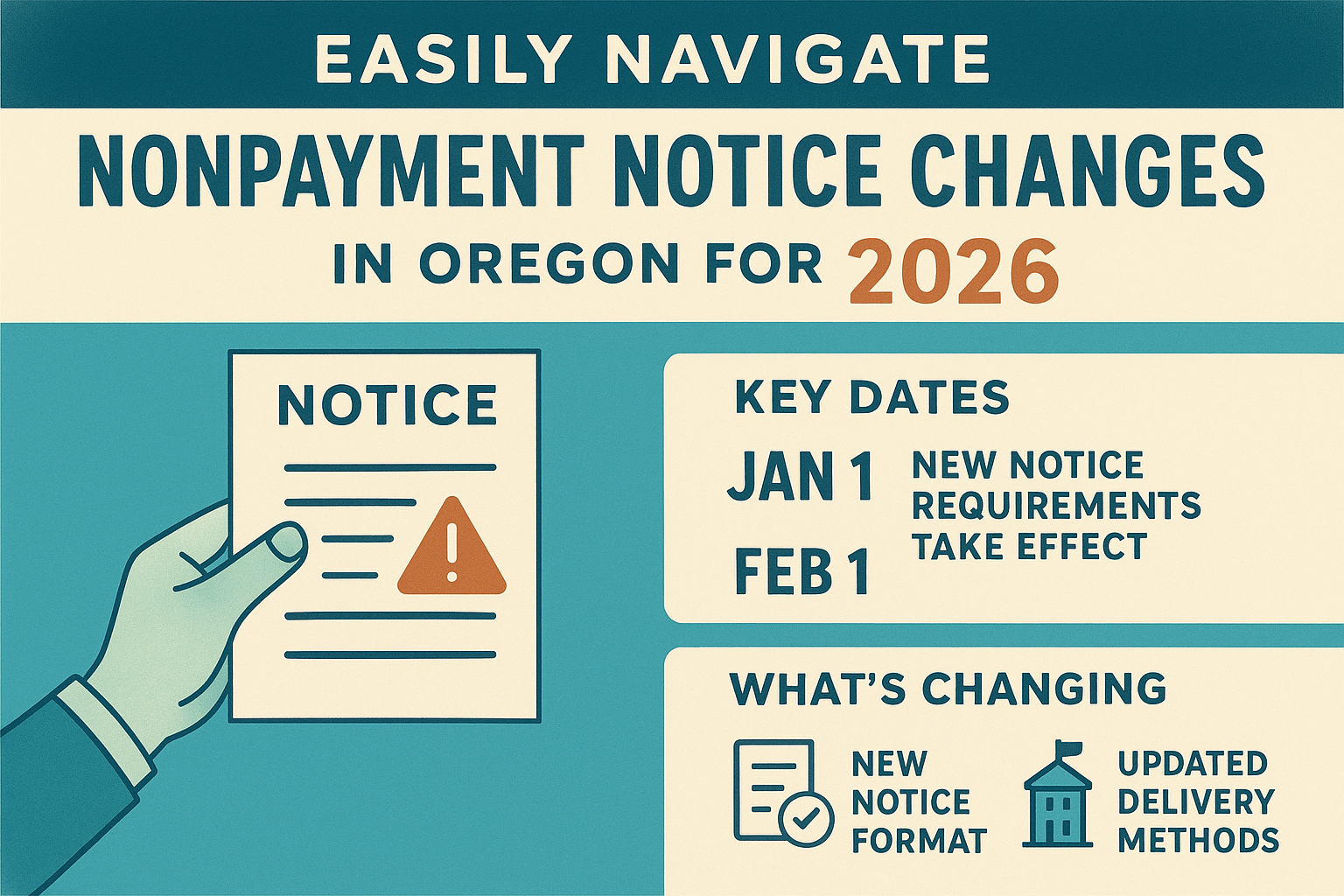
Understand why the 2026 changes matter
Staying on top of nonpayment notice changes in Oregon can be a make-or-break issue for owners and property managers of mid-size apartment buildings. When tenants fall behind on rent, issuing the correct notice is essential for moving forward with an eviction case if needed. In 2026, Oregon will introduce revisions to the nonpayment notice requirements, including a newly updated form in January. These updates might seem like extra red tape at first, but they are designed to protect tenant rights while giving you clear guidelines to follow.
By familiarizing yourself with the changes now, you will be a few steps ahead when the new regulations take effect. This means fewer mistakes, reduced delays in your rental operations, and the comfort of knowing you are in full compliance with state law.
Know the required attachments
Whenever you serve a nonpayment notice, Oregon law typically requires attaching specific documents and helpful resources. The exact attachments can shift with each statutory update, and starting in January 2026, there may be additional inserts you must provide. These attachments ensure tenants understand their rights and know where to seek assistance if they are struggling to pay rent.
In practice, most Oregon nonpayment notices should include:
- A clear explanation of the balance owed, including rent due and any applicable fees.
- Information on how the tenant can respond within the legal timeframe, along with accepted payment methods.
- Resource sheets that outline possible rent assistance programs and legal aid contacts, so tenants can find help before the notice expires.
Double-check the regulations each time you serve a notice. You want to be sure you are distributing the most current versions of any required attachments.
Tips for managing attachments
Try organizing your notice packet into labeled sections or folders. This helps tenants understand what they are receiving and reduces confusion on your end. You could keep an updated master folder of all relevant documents, so you only need to print and attach updated parts when laws change. This approach saves you from scrambling to find newly mandated handouts at the last minute.
Navigate the new January 2026 notice form
One of the most critical shifts is the rollout of a revised nonpayment notice form starting January 1, 2026. Whether you manage a handful of units or a whole mid-size apartment complex, you will need to adapt your procedures to incorporate this new template. From the layout to the language, every detail matters.
Unlike older notices, the 2026 form is expected to include:
- Clearer instructions on tenant rights for addressing nonpayment before the notice deadline.
- Additional empty fields for specifying which required attachments you served and the date they were issued.
- A more transparent breakdown of the rent due, late fees, and other charges, reducing ambiguity for all parties.
Common mistakes to avoid
Mistakes often crop up when the new form does not align with your current office practices. It helps to review the final version of the form with your team before the requirement date. Make sure everyone knows where each piece of information belongs and how to attach relevant documents. Even a small error can lead to a judge dismissing your nonpayment case, so a bit of training goes a long way.
Follow the correct service and timing
A properly filled-out notice with the right attachments only works if you also serve it correctly. Oregon laws spell out specific delivery methods and timelines. Failure to follow these steps can delay your eviction process or, in some instances, invalidate your notice entirely.
When serving a nonpayment notice:
- Ensure you have the correct date on the document and verify tenant information, including unit number and address.
- Hand-deliver the notice or post it on the door if the tenant cannot be reached in person. In some cases, you can also mail the notice with proof of mailing or use another legally approved method.
- Count the days properly. Nonpayment notices typically come with a strict deadline by which the tenant must respond or pay. If you calculate due dates incorrectly, you risk giving either too much or too little time for compliance.
Keeping detailed records is vital. Jot down the date and method of service, and keep copies of the notice and attachments for your files. These records are crucial if the tenant disputes receiving the notice or questions the timeline.
Spot common pitfalls around compliance
While drafting and delivering the notice is the main challenge, there are a few other pitfalls to watch for as 2026 approaches. You may face legal complications if you miss the mark on any of these areas:
- Incomplete attachments. Always verify that you are including all required resources. Skipping even one mandated form can invalidate your notice.
- Old wording. When Oregon updates its official forms, outdated language becomes a liability. Make sure your entire notice text matches the final 2026 version.
- Confusing rent breakdowns. Tenants deserve a clear explanation of how you calculated the amount due. Always break out individual fees or charges so the total is easy to verify.
- Late or improper service. Notice periods start counting from the proper day of service. An incorrect date or missed signature can trigger disputes that prolong the process.
Handle disputes proactively
Even when you diligently follow the rules, there will be times when a tenant disputes the rent amount, the notice requirements, or the validity of the documents you served. This can be stressful, but you can often resolve issues by taking a proactive approach.
Start by reviewing the notice and attachments on file. Confirm that they match the lawful template and that you respected the tenant’s response window. If your records are solid, schedule a conversation with the tenant to clarify any misunderstandings. Keeping solutions friendly and transparent may help you agree on a repayment plan or an alternative arrangement before the notice expires.
Should the dispute escalate, consult an attorney with experience in Oregon landlord-tenant law. Prompt legal advice can help you navigate any court proceedings and ensure you do not repeat the same error in future notices.
Frequently asked questions
Is there a grace period beyond January 1, 2026?
At this time, Oregon lawmakers have not announced a grace period for using the older version of the nonpayment notice. You should plan to start using the new form immediately on January 1, 2026.
Do I need new attachments for every notice?
Yes. Each notice must include current attachments, as older versions can become outdated when laws or required resources change.
What if the tenant refuses the packet?
Even if a tenant refuses to accept the notice, you still remain responsible for serving it correctly. Document the refusal, and if necessary, post a copy on the tenant’s door or send it by approved mail.
Key reminders as 2026 approaches
Preparing early for the new nonpayment notice changes in Oregon can save you from headaches down the road. Update your office systems, keep track of required attachments, and train your staff on how to use the January 2026 form. By clarifying each detail, you reduce your chances of legal complications while helping tenants understand exactly what they owe and why.
Although these changes might feel daunting, they also offer an opportunity to refine your property management processes. Clear communication goes both ways. Tenants benefit from straightforward notices and resource information, and you benefit from smoother resolution of unpaid rent. Ultimately, careful preparation puts you in the best position to handle nonpayment cases promptly and effectively.


